Origin

Scissors and Tape

Vintage portable reel-to-reel tape recorder, circa 1960s
Portable reel-to-reel tape recorder, circa 1960s. Wikimedia Commons.

In 1956, Walter Murch was six years old, and his father brought home one of the first consumer tape recorders sold in New York. Within a week, the boy had figured out that if you cut the tape with scissors and reassembled the pieces in a different order, you could make the sounds mean something they didn't mean before. A sentence recorded on a Tuesday afternoon could be followed by birdsong recorded the following Sunday, and the juxtaposition created a relationship between the two that neither possessed alone. He wasn't writing. He wasn't composing. He was editing, although he wouldn't have called it that yet. He was discovering that the act of placing one thing next to another is, in itself, a form of authorship.

Murch went on to cut Apocalypse Now, The English Patient, The Conversation. He became one of the most important film editors in history. But the thing he learned at six, with scissors and magnetic tape, is the thing I keep coming back to in my own work, because I think it's true in a way that most people who edit or write haven't fully reckoned with: the decision of what follows what is the primary creative act. Everything else, the shooting, the recording, the drafting, produces raw material. The arrangement of that material into a sequence that creates meaning in someone else's mind is where the authorship actually lives.

The decision of what follows what is the primary creative act.

I want to make a case that editing and writing are not two disciplines that share some similarities. I think they're the same discipline, practiced in different materials, and that understanding this changes how you approach both.

· · ·
Structure

The Cut and the Paragraph Break

Moviola 35mm film editing machine
Moviola 35mm film editing machine. Wikimedia Commons.

Consider the most fundamental unit of each craft.

In film editing, it's the cut: the decision of when to leave one shot and enter another. Too early and the viewer hasn't absorbed what the first image was offering. Too late and the energy built during the shot starts to dissipate, the visual equivalent of a sentence that keeps going after it's made its point. Murch wrote in In the Blink of an Eye that the ideal cut happens at the moment when the viewer would naturally blink. There's a rhythm to human attention, a pulse of absorption and micro-release, and the edit should land in those release points. He tested this by watching audiences and noting when their blinks clustered, and found that good cuts and natural blinks coincided with remarkable consistency.

In writing, the equivalent is the paragraph break.

Shot A
Shot B
A paragraph break is a cut. Same function, same weight, different material.

This isn't a metaphor. A paragraph break is a cut. It performs the same function in the same way for the same reason. It says: that unit of thought is complete, we're transitioning. And the decision of where to place it carries the same editorial weight as the decision of where to place a film cut. Break too soon and the idea feels abandoned before it had a chance to fully develop. Break too late and the reader's energy, which accumulated through the opening sentences, bleeds out through the additional ones that didn't need to be there.

Joan Didion at the Brooklyn Book Festival
Joan Didion. Wikimedia Commons.

Joan Didion understood this at a level that made her prose feel unlike anyone else's. Her paragraph breaks consistently arrive one sentence before you expect them. The thought is stated, and instead of the elaboration you're anticipating, there's white space. The next paragraph begins somewhere slightly adjacent, and the gap between the two becomes a space where the reader does their own thinking, draws their own connections, fills in implications that would have been less powerful if they'd been spelled out. That gap is a cut. It's the same instinct Murch describes, landing the transition at the point of natural release, but practiced in sentences instead of frames.

The floating torii gate of Itsukushima Shrine
Itsukushima Shrine. Wikimedia Commons, CC BY-SA.

And the Japanese concept of ma is relevant here in a way I didn't expect when I first encountered it. Ma is sometimes translated as “negative space,” but that undersells it. In Japanese architecture and design, ma refers to the meaningful emptiness between structural elements, the pause that is itself an element. The space between two pillars in a temple gate is not an absence of pillar. It is the interval that gives both pillars their significance. A paragraph break is ma, and so is a film cut. The absence is not where the meaning stops. It's where certain kinds of meaning become possible for the first time.

· · ·
Technique

The Delayed Reveal

The parallel deepens when you look at how each craft handles the withholding and release of information.

One of the most effective structural techniques in film editing is what editors sometimes call “the delayed reveal.” You show the audience enough to understand the situation but withhold one crucial piece of information, and the absence of that piece generates forward momentum. The audience keeps watching because they're aware of a gap between what they know and what they want to know, and that awareness creates a tension that resolves only when the missing piece arrives. You can't be curious about a question you don't know exists. So the editor's job is to make the gap visible, to give you enough to perceive the outline of an answer you don't yet have, and then to calibrate how long that gap stays open before the answer arrives.

You can't be curious about a question you don't know exists.

Essayists have been doing the same thing for centuries. The New Yorker's tradition of long-form narrative nonfiction, from Joseph Mitchell through to the present, is built on exactly this kind of information management: giving the reader enough to see the outline of where a piece is headed while keeping the centre empty until the moment of maximum receptivity. Gay Talese's famous profile “Frank Sinatra Has a Cold” opens with a series of scenes that establish Sinatra's world, his entourage, his moods, his environment, before Talese ever addresses the central fact that Sinatra wouldn't agree to be interviewed. The reader is fifteen hundred words in before they understand the structural premise of what they're reading, and by that point they're too invested to leave.

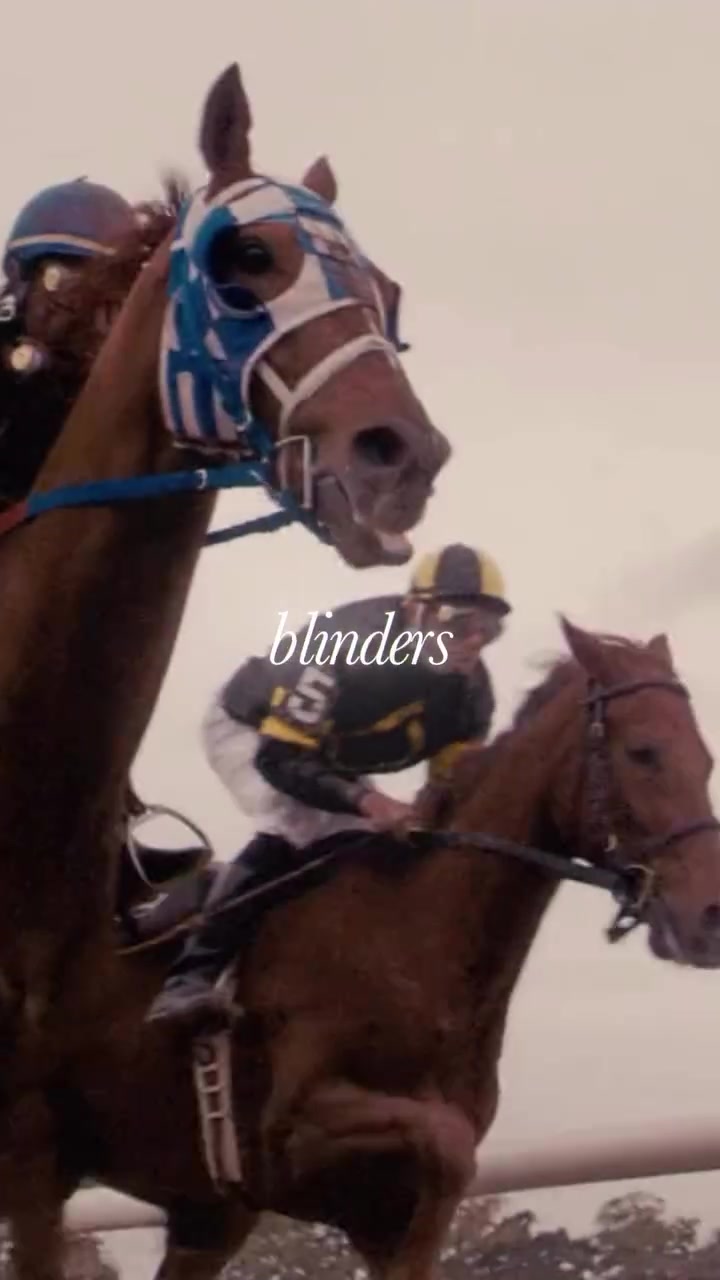
An editor working with a podcast excerpt faces the same challenge in compressed form. The 20-second Founders excerpt I broke down recently spends its first nine seconds building a metaphor about racehorses and blinders. Around the eight-second mark, you can feel the audience's attention shift from “that's interesting” to “but where is this going?” The editor holds the metaphor for two more seconds, just long enough for the curiosity to peak without tipping into impatience, and then delivers the pivot. The timing of that release, the editorial judgment about exactly how long to withhold before revealing, is the same judgment a writer makes when they decide how long to delay the thesis of an essay. Too soon and it feels thin. Too late and you've lost the reader. The art is in the calibration.

· · ·
Rhythm

Pacing Across Mediums

Pacing might be where the connection between the two crafts becomes most physically apparent, where you can actually feel the same principle operating in different materials.

A film editor controls emotional pace through shot duration. A rapid sequence of short shots, each lasting a second or two, creates urgency and forward pressure. The viewer's perceptual system is processing new visual information at a rate that feels slightly faster than comfortable, and that slight excess is what produces the sensation of mounting intensity. A long, held shot, by contrast, slows the viewer's processing to a contemplative pace. Time seems to expand. You become aware of details within the frame, textures and movements you wouldn't have noticed if the editor had cut away sooner. The shift between these two registers, the alternation of compression and expansion, is where the emotional structure of a film sequence lives.

Writing does the same thing with sentence length, and the mechanism is the same.

Short sentences. Quick cuts.Then a long one that stretches.

When a writer uses several short sentences in succession, the reader's pace quickens. Each period is a small percussive stop, and the frequency of those stops creates a reading rhythm that feels clipped and forward-leaning. When a writer follows those short sentences with a long one, one that stretches across a full line and asks the reader to hold more of the thought in working memory at once, the pace slows and the texture thickens. The shift feels like going from a series of quick cuts to a slow tracking shot.

Cormac McCarthy, 1968
Cormac McCarthy, 1968. The Knoxville Journal, Wikimedia Commons.

Cormac McCarthy was doing this with extraordinary precision throughout his career. A passage from Blood Meridian will run for most of a page in a single sentence, accumulating images and actions with a rhythmic insistence that creates something close to hypnosis, and then he'll follow it with a three-word paragraph: “They rode on.” The effect is a hard cut. The sentence-level rhythm breaks, the reader's body responds to the break, and the emotional register shifts in a way that can't be achieved through content alone. The rhythm is not carrying the meaning. The rhythm is the meaning.

Duke Ellington
Duke Ellington. Wikimedia Commons.

A musician would recognise what both of these crafts are doing, because it maps directly onto how musical dynamics work. A crescendo passage followed by a sudden rest, where the silence isn't empty but is the negative space that gives the crescendo its shape. Duke Ellington put it simply: “It's not the notes you play. It's the notes you don't play.” He could have been talking about film editing, or about prose, or about the spaces between paragraphs in a long essay. The principle is the same in every medium because human attention works the same way regardless of what it's attending to.

· · ·
Instinct

Pattern Recognition

There's a moment in the editing process, regardless of the material, where conscious decision-making recedes and something else takes its place.

You've been working on a piece for hours. You know the material so well that you've stopped reading the individual words or watching the individual frames and have started perceiving the shape of the whole thing, the way you stop seeing individual trees at some point during a walk in a forest and start sensing the forest's overall contour. And then you make a decision, a cut, a restructuring, a paragraph repositioned from the middle to the end, that you couldn't have reached through deliberate analysis. You did it because the work seemed to need it. And when you step back and evaluate the result, it's better than what you had, but if someone asked you to explain why you made that particular choice, you'd find yourself reaching for language that sounds closer to feel than to reason.

What you experience as instinct is the output of a process you can't observe directly.

I used to find this uncomfortable. I wanted to be able to justify every editorial decision with a clear rationale, to have a framework for every choice. But the more I've edited, and the more I've talked to other editors and writers about their processes, the more I've come to understand this as pattern recognition operating below the level of conscious awareness. You've absorbed thousands of examples of what works and what doesn't over years of practice, and your brain is running those patterns against the current problem faster than your deliberate mind can track. What you experience as instinct, as “feeling” the right cut or sensing that a paragraph needs to move, is the output of a process you can't observe directly.

Gary Klein, who studied how experts make decisions under pressure, found the same thing across completely different fields: firefighters, intensive care nurses, military commanders. None of them were comparing options and selecting the best one, the way decision theory says they should. They were recognising the situation as belonging to a pattern they'd seen before, and the right response was arriving as a single perception rather than the output of analysis. I think that describes what happens in the editing room and at the writer's desk more accurately than any craft manual I've read. The instinct is real, built from the residue of experience, and it operates the same way regardless of the medium.

The vocabulary differs. “I felt the cut.” “The sentence wanted to end there.” “The piece needed room to breathe.” But the underlying experience, the sense of the work communicating what it needs and the practitioner's trained perception responding, is the same regardless of the material being shaped.

· · ·
Boundary

Why We Treat Them as Separate

So if these are the same discipline practiced in different materials, why does almost everyone treat them as separate?

Part of it is institutional. Film schools teach editing. Writing programs teach prose. Music conservatories teach composition. The professional communities are distinct, the tools are different, the critical vocabularies have evolved independently. Someone who edits documentaries for a living and someone who edits essays for a living could spend an hour describing their respective processes and recognise themselves in each other's descriptions at every turn, but they would have to go looking for that recognition. The institutional structures they trained in, and the professional identities they were handed, tell them they do different things.

Part of it is the materials themselves. When you're working in Premiere Pro or DaVinci Resolve, the interface is telling you, with every panel and every tool, that you are doing video editing. When you're working in a word processor, the interface tells you that you are doing writing. The medium creates a perceptual boundary that makes the underlying craft decisions feel medium-specific even when they're not. You don't notice that the decision to cut from one shot to the next and the decision to end one paragraph and begin another are the same decision until you've worked in both mediums and felt the same instinct activate in both contexts.

You can't see the water when you're the fish.

The people who tend to see through the boundary are the ones who've crossed it. They started in film and moved to writing, or started in writing and moved to editing, and the crossing itself is what made the common structure visible. You can't see the water when you're the fish. You have to spend time in a different element before you understand what you were swimming in.

· · ·
Closing

The Decisions Are the Craft

The practical implications of this are worth taking seriously.

If editing and writing are the same discipline in different materials, then the skills you develop in one medium are directly transferable to the other. The years you spend cutting video are teaching you about prose rhythm, about information management, about the timing of revelation and withholding. The years you spend writing are teaching you about visual pacing, about when to hold a shot and when to cut, about how to build and release tension through sequence.

This means that the most effective way to improve at one craft might be to practice the other. A writer struggling with pacing could learn more from studying how a film editor builds momentum across a sequence than from reading another book about sentence structure. An editor struggling with narrative clarity could learn more from studying how a good essayist manages information across an argument than from watching another editing tutorial.

It also means that the boundaries between creative roles are, to a significant degree, artificial. An editor is a writer working with someone else's footage, and a writer is an editor assembling sentences into a sequence. A musician composing a melody is making the same fundamental decisions about what follows what and how long each element is allowed to breathe before the next one arrives. The material changes but the decisions don't.

That, I think, is the thing I've been trying to understand across everything I've written about editorial craft so far. What are the decisions that shape how someone experiences a piece of work, and why do those decisions persist across mediums and centuries and forms? The answer I keep arriving at is that there's a single underlying craft, a discipline of sequence, emphasis, rhythm, and purposeful omission, that operates the same way regardless of whether you're arranging frames on a timeline, sentences on a page, or notes on a staff.

The decisions are the craft. The material is just what you happened to pick up that morning.