Or (MP3, M4A, WAV or MP4). Up to 90 minutes and 600MB. Spotify links can’t be read, so type the show’s name instead.
How do I find the best clips in an educational podcast?
Educational clips do well when they teach one thing completely: a definition a viewer didn’t have words for, a mechanism explained plainly, a myth corrected. The expert’s clearest minute is usually the clip.
Slice’s podcast clip finder is a free web tool that finds the best moments to clip in a podcast episode. Paste an Apple Podcasts link, an RSS feed or the show’s name, pick an episode, and it transcribes the whole episode and picks its 3 best moments of 30 to 90 seconds, each with its start time, length, opening line in the speaker’s own words, and one sentence on why it works. You can play each moment from the episode itself and see the top one as a finished audio clip with the show’s cover art, captions and a waveform. It is free with an email address and no account: 3 episodes a month per person, each up to 90 minutes. It does not take YouTube links. It is made for podcasters, including audio-only shows, and for churches that publish sermons as a podcast.
- Price
- Free: 3 episodes a month per person (shared with Slice’s free transcription tool). Making the clips in Shorts by Slice: the first 3 exports free, then $14.99 a month or $149 a year.
- Input
- An Apple Podcasts link, an RSS feed, the show’s name (found in Apple’s podcast directory), or an uploaded MP3, M4A, WAV or MP4. Not YouTube links. Spotify links can’t be read because Spotify doesn’t share feeds; type the show’s name instead.
- Length
- Episodes up to 90 minutes.
- Output
- 3 moments of 30 to 90 seconds, each with a title, start time, length, opening line and why it works; playable from the episode; the top one previewed as a finished audio clip. The full transcript by email.
- Account
- None needed to see the moments; an email address is. A free Slice account to make the clips (Google sign-in works).
- Kept
- Your moments for 30 days behind a private link, then deleted unless you made them into clips.
What makes a good clip from an educational podcast
- A definition in plain words, ideally from the expert.
- A how-it-works explanation with an everyday comparison.
- A misconception corrected, with the reason.
- Not a list of caveats or the reading of a study’s methods.
A real example: Short Wave
We ran the finder on “One of the toughest parts of ADHD is left out of the diagnosis” from Short Wave (14 minutes, public RSS feed) on . These are the three moments it picked, unedited, in the order it ranked them. The quotes are the speakers’ own words, shortened.
What rejection sensitive dysphoria actually is
“Rejection sensitive dysphoria is this incredibly robust emotional, sometimes physical, but mostly emotional response to rejection or criticism. And the…”
Why it works: Clear definition of a condition many people experience but don't have a name for, explained by a psychiatrist.
How ADHD brains process emotional threats differently
“you are perceiving a threat and you're actually experiencing the chemical cascade that goes on before that logical side can…”
Why it works: Explains the neuroscience behind emotional dysregulation in accessible terms, showing why logic doesn't help in the moment.
Why emotional dysregulation got left out of ADHD diagnosis
“we started to favor observable symptomology. Like this is hyperactive behavior. I could see it. And it's easy to measure.”
Why it works: Explains a critical gap in psychiatric diagnosis that affects millions of people with ADHD.
Excerpts from Short Wave, quoted to show how the tool works; listen to the full episode. Not an endorsement by the show. Finding these moments cost us $0.04 in transcription and AI.
How it works
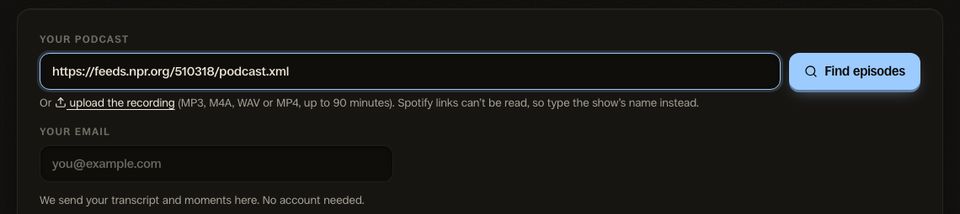
1. Paste your show
Your Apple Podcasts link, your RSS feed, or just the show’s name. The latest episodes appear, newest already picked.
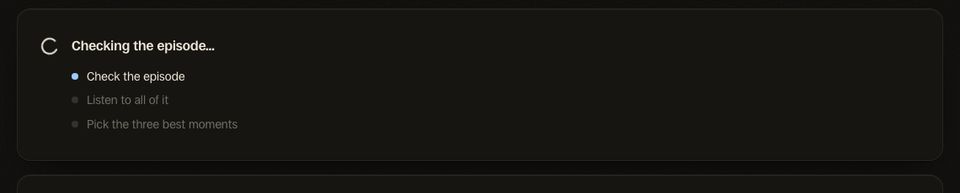
2. Let it listen
It transcribes the whole episode and reads it for moments that stand on their own. A 15-minute episode took under a minute in our test.
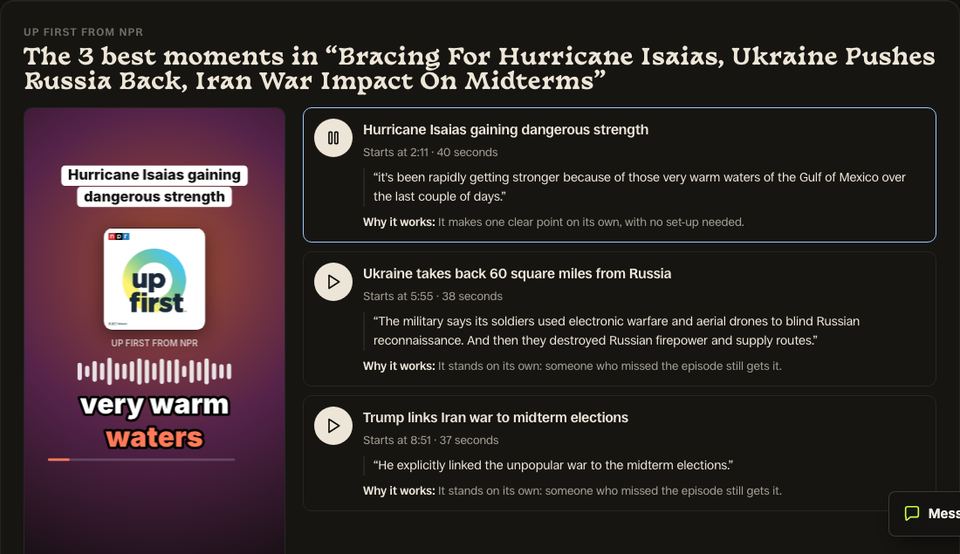
3. Hear your 3 moments
Each with its time, opening line and why it works. Play them from the episode, see the top one as a finished clip, then make all three.
Tips for educational podcasts clips
- Put the term being explained in the first caption.
- Credit the expert by name and role in the caption.
- Add the source or paper link in the post, not the clip.
- Health topics: keep the expert’s qualifiers in the clip; don’t cut to a stronger claim than was made.
Questions
Does it work for lectures?
Will it cut a claim out of context?
Can I get the transcript for show notes?
Does it work in other languages?
Can I paste a Spotify link?
What happens when I press Make these 3 clips?
The clip finder for other shows
Related
More Free Tools
Shorts by Slice
From the team behind these free tools
One video. A week of posts.
Upload an episode and get back the moments worth posting, cut and captioned.
- Reads the whole episode, then picks the excerpts worth posting
- Captions burned in and framed vertical, ready to post
- Your first video and first 3 clips are free, no card